Cart
0
You may also like





ERB Circle members get free delivery from ₹499 and extra 3% off


Save ₹0 on this order. Join ERB Circle, 3 months for ₹299
local_shipping Free delivery above ₹999
We will send you an email to reset your password


Eat Right Basket 0 comments
The famous saying - “An Apple a day Keeps the Doctor Away” - does not hold true anymore.
Apples, a staple fruit in many Indian households, conceal a disturbing reality. In the pursuit of producing a shining, well rounded, thick skinned perfect Apple, orchards have resorted to heavy chemical and pesticide use in apple farming, Mindless of the fact that it is causing a health hazard to humans, environment and all living beings dependant on the orchard ecosystem.
Commercial apple farming in India employs:
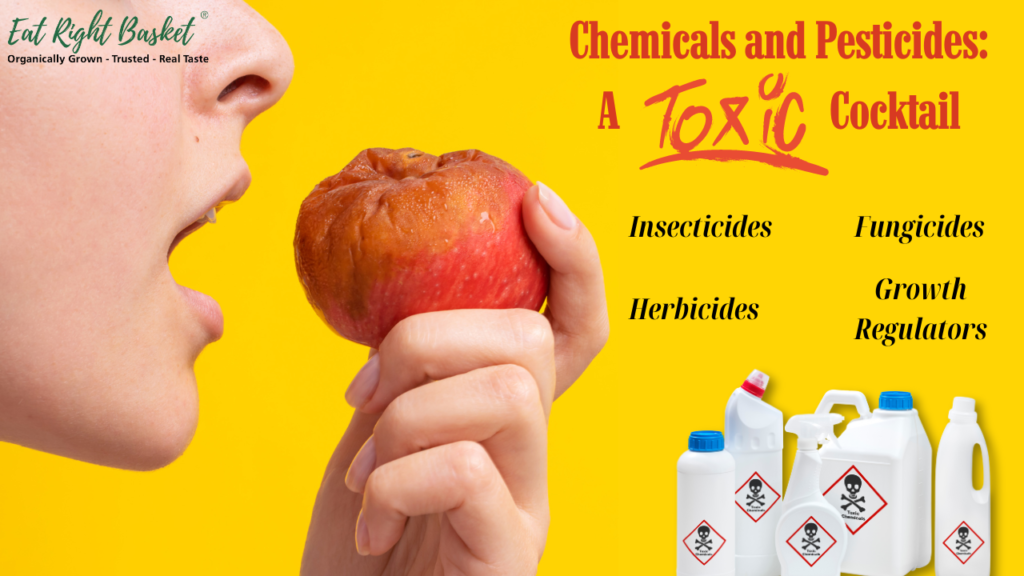
- ICMR study (2020): 70% of apple samples from Himachal Pradesh, Jammu and Kashmir, and Uttarakhand contained pesticide residues exceeding safe limits.
- CSE report (2019): Indian apples contain higher pesticide residues than global standards.
- IIT-Delhi research (2018): Chlorpyrifos, a commonly used insecticide, contaminates 90% of apple samples.
Exposure to these chemicals has devastating consequences:
- Cancer risk: Exposure to chlorpyrifos, glyphosate, and 2,4-D increases cancer risk.
- Neurological damage: Chlorpyrifos and neonicotinoids harm brain development and function.
- Reproductive issues: Exposure to pesticides affects fertility and fetal development.
- Environmental harm: Chemical runoff contaminates waterways, harming aquatic life.
The Residue Remains
Apples retain pesticide residues, even after washing:
- FSSAI findings: 55% of apple samples contained pesticide residues.

Mitigate exposure:
1. Buy organic: Opt for certified organic apples.
2. Local and seasonal: Support local farmers using integrated pest management.
3. Wash thoroughly: Use vinegar or baking soda to remove residues.
4. Peel: Remove skins to reduce pesticide intake. However this trick actually takes away a lot of fibre and minerals that are very useful for our body and digestion.
1. Advocate for sustainable agriculture: Support eco-friendly farming practices.
2. Encourage policy reform: Push for stricter pesticide regulations.
3. Educate others: Share the risks associated with chemical-laden apples.
Protect your health and the environment. Choose organic, locally sourced apples and demand a toxic-free future.